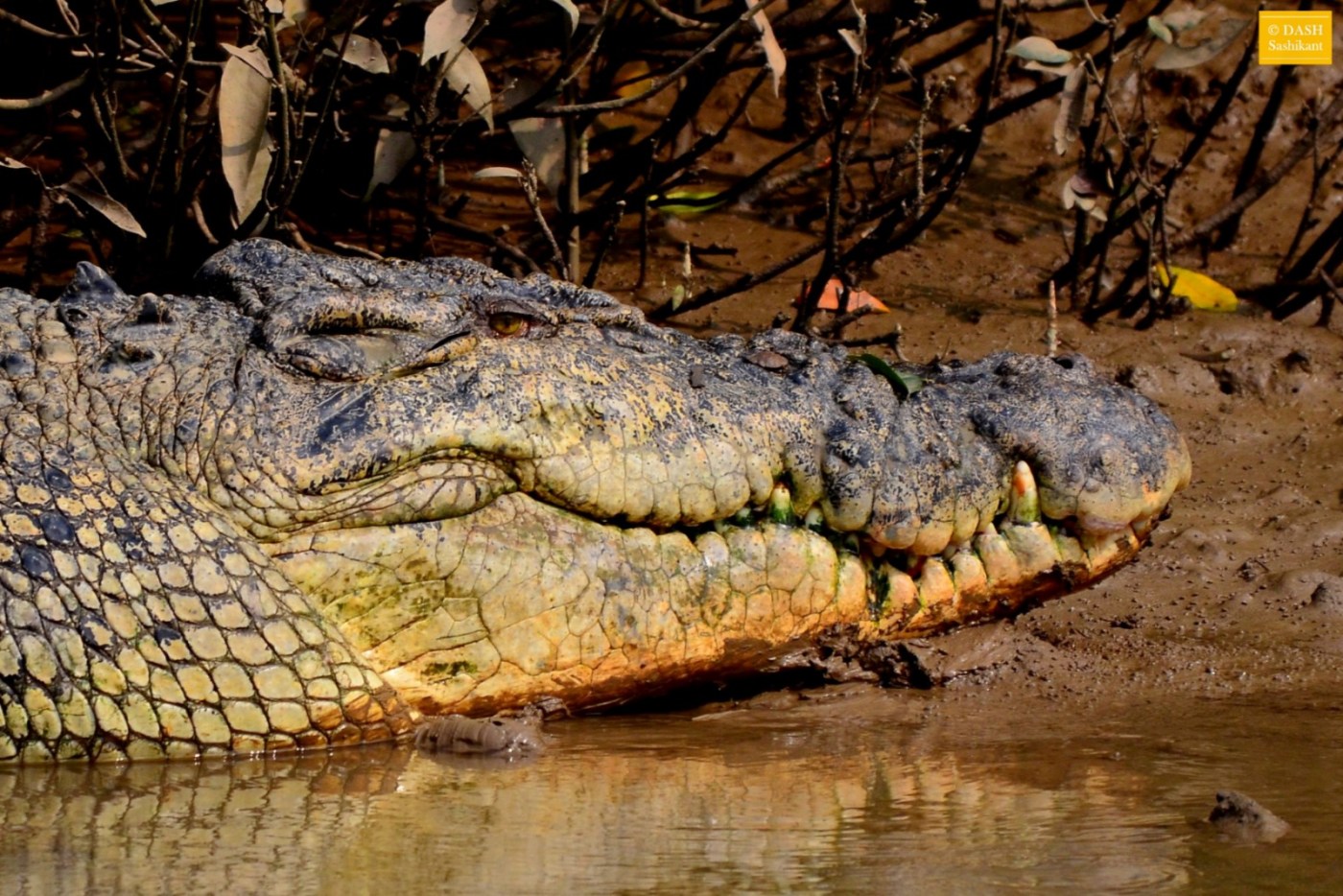
A day trip to Bhitarkanika with my family in November of 2015 was one of those visits where you don’t really know what to expect, and then it completely blows you away.
Orissa (now Odisha) has never quite been on the tourism radar in India, although that’s now slowly beginning to change. So it’s of little surprise that people (including wildlife enthusiasts!) are clueless when I tell them about Bhitarkanika.
So where and what is Bhitarkanika?
Bhitarkanika is a wildlife sanctuary and a biodiversity hot-spot on the east coast of Orissa, and was declared a National Park in 1998. It is a unique eco-system with meandering rivers and creeks, estuaries and lush green mangrove forests which are home to a wide variety of flora and fauna. One can say it’s the smaller cousin of the Sundarbans, but without the Royal Bengal Tigers ruling the jungle. The park is a leader in wildlife conservation efforts in India. Gahirmata in Bhitarkanika is the world’s largest nesting beach for the vulnerable Olive Ridley turtles, while Bhitarkanika itself is one of the biggest success stories in Indian wildlife. What started off as a crocodile conservation project with around 95 saltwater crocodiles in 1976 is now home to more than sixteen hundred crocodiles.
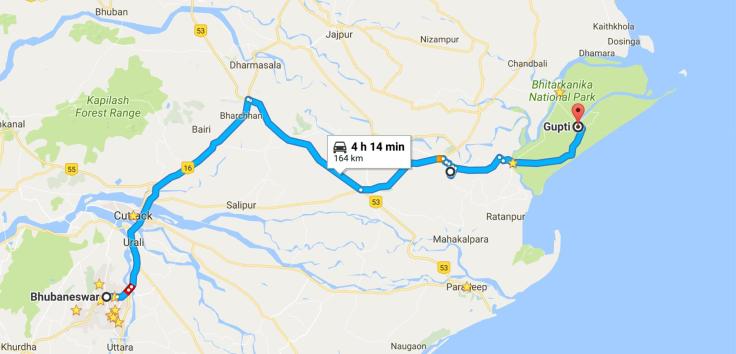 Bhitarkanika is 164 kms from Bhubaneswar and it’s best to take the route through Chandikhol
If these large reptiles which have evolved over 200 million years and are the ultimate survivors having outlived the dinosaurs by more than 65 million years, fascinate you, a trip to the mangrove forests of Bhitarkanika should be on the top of your list.
To give you an idea, here’s a virtual tour of Bhitarkanika through pictures.
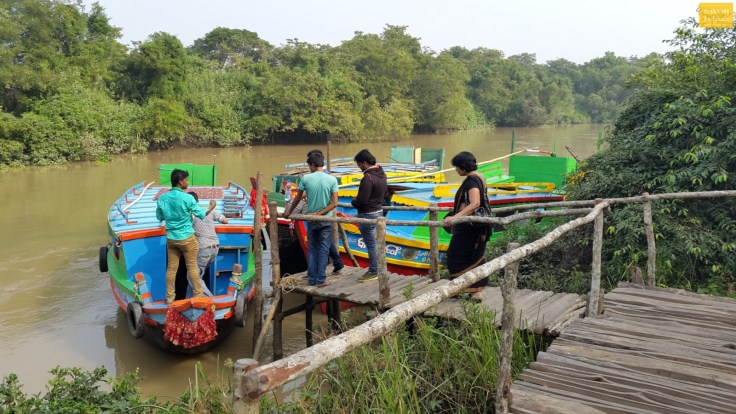 Hopping on to our boat at the boarding point at Gupti
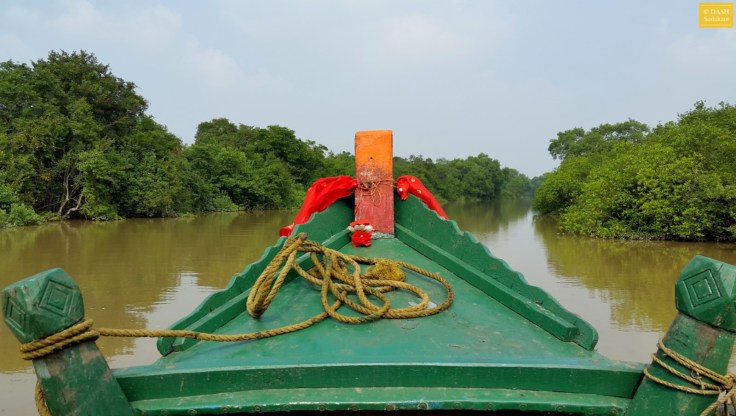 And off we go into the second largest mangrove forest in India. Largest is the Sundarbans.
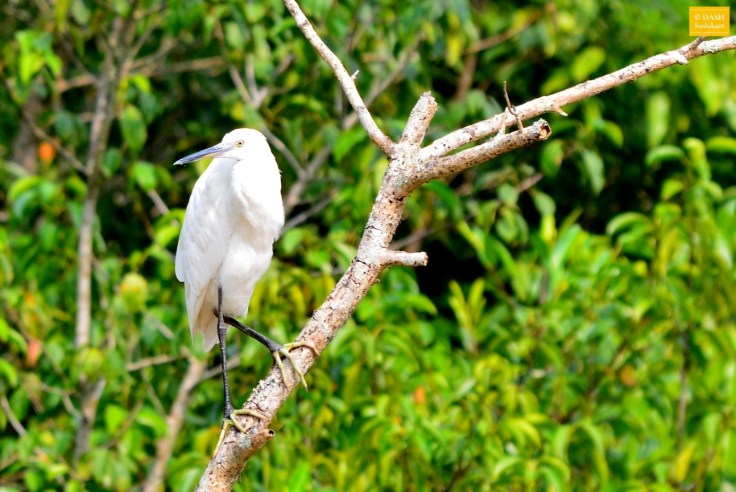 Greeted by a snowy egret
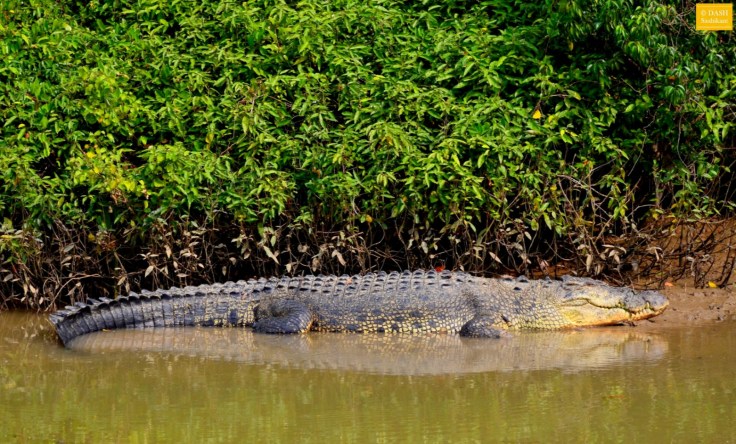 The first crocodile sighting of the day and it was a real monster!
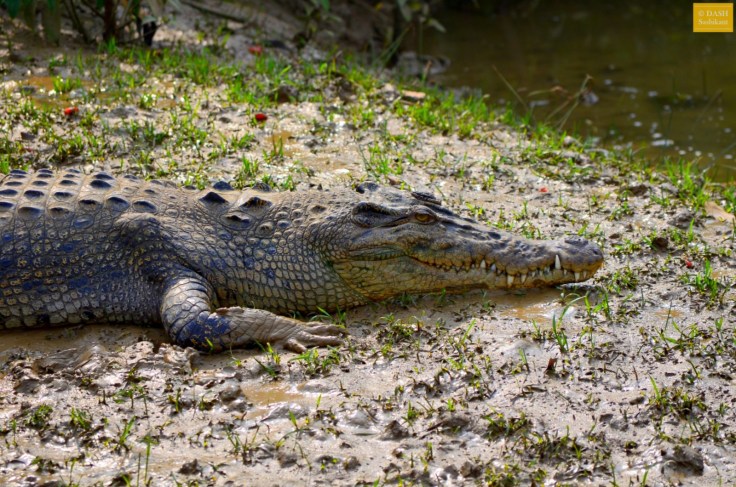 Smaller sightings of younger crocodiles
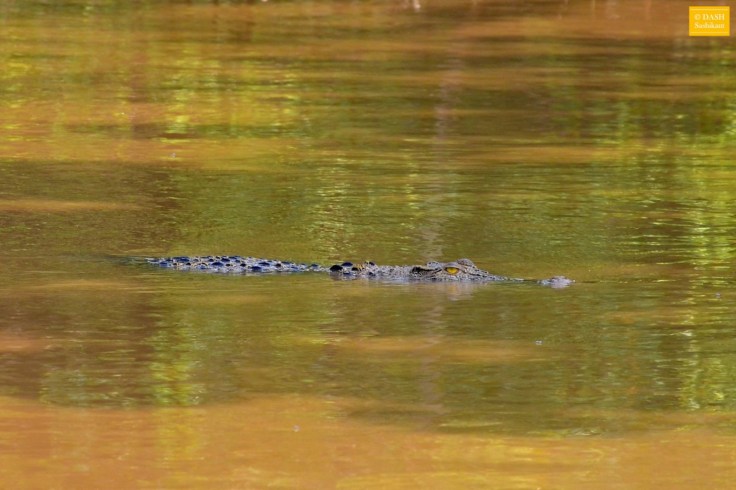 Baby croc and its deathly stare
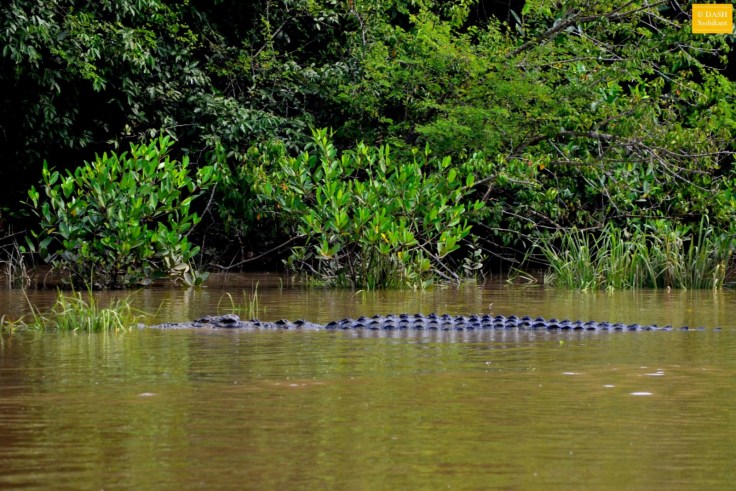 Our biggest sighting of the day. This was more than 15 feet in size and such sightings are not uncommon here. The largest recorded crocodile in Bhitarkanika is around 23 feet!
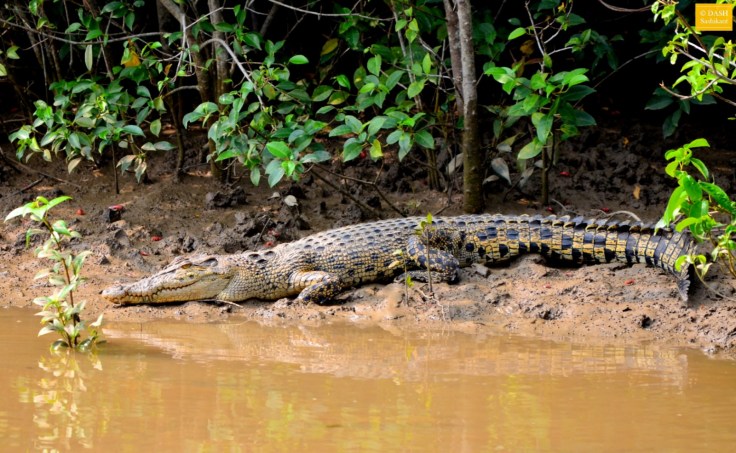 One beautiful reptile. Love the spots and patterns
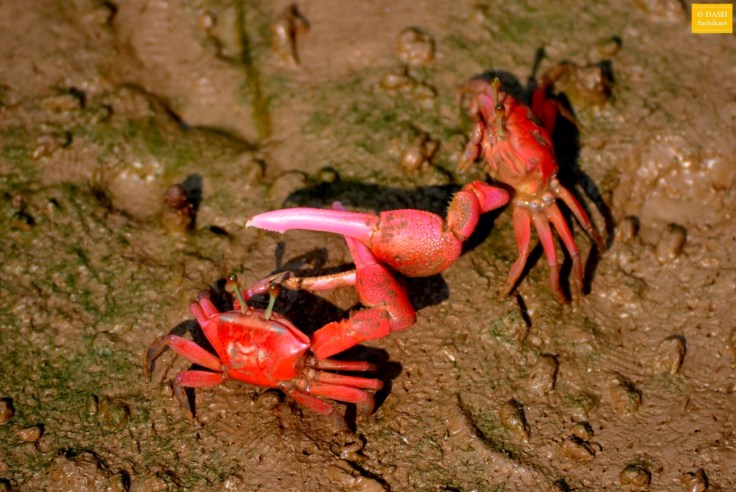 Red crabs spotted while walking inside the core forest area. There’s a nice walking trail at Dangmal
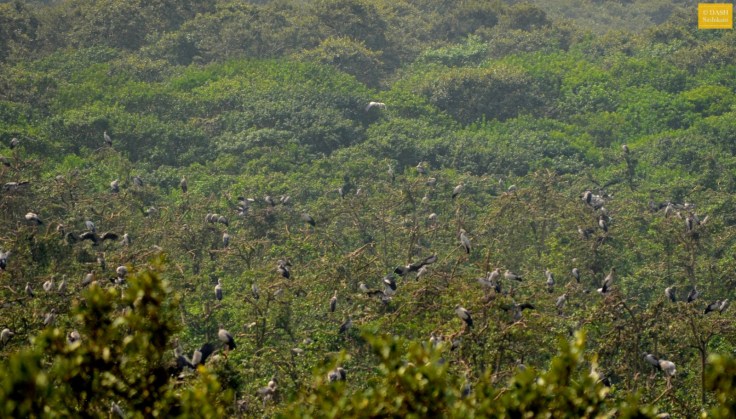 Dangmal also has a watch tower from where one can watch migratory birds on tree tops in the winter
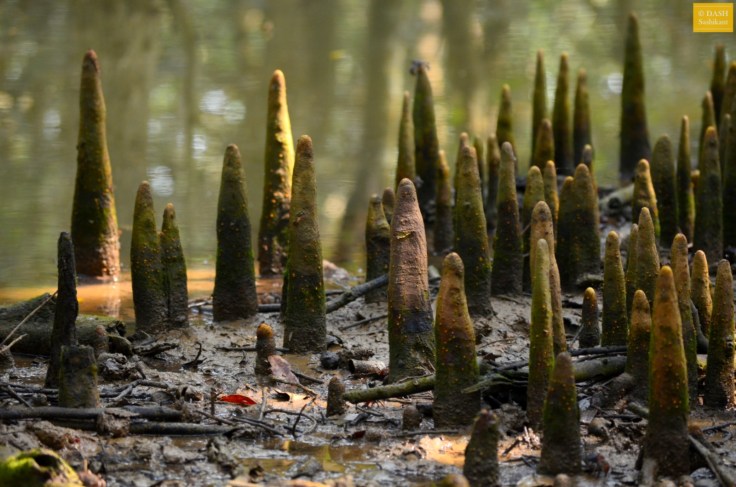 Aerial roots in the mangrove forests
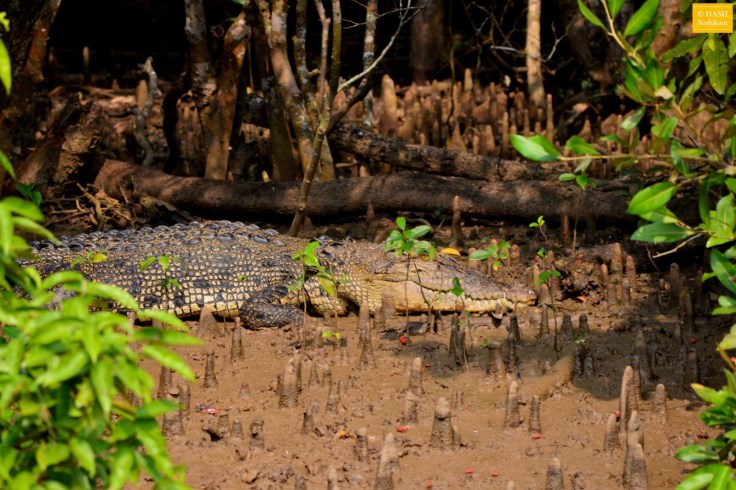
If Bhitarkanika was to be summarized with one pic, then this is it! Mangrove forests, aerial roots, muddy patches and saltwater crocodiles.
Bhitarkanika has around ten albino (white) crocodiles, ten crocodiles between 16-20 feet long and three giant crocodiles which are more than 20 feet in length. It is still a largely unknown sanctuary, under promoted by the state tourism authorities and hence, under visited and highly underrated. This works well for the limited tourists and especially wildlife photographers who visit the park, as sightings are commotion free and uninterrupted by noisy groups of visitors, which is often the case in popular national parks in India.
There is much more to Bhitarkanika which I could not cover through my camera, such as the endangered species of Oliver Ridley turtles at Gahirmata. More on it and Orissa wildlife can be found on the state forest department’s website:
http://www.odishawildlife.org/seaturtleproject.html
The park also has accommodation facilities inside the jungle for those who do not want to rush through this park, and instead enjoy a peaceful evening with bonfire in nature’s lap amidst calls from birds and animals in the jungle.
While everything seems perfect here, one thing truly surprised me during this visit. Despite the low tourism, it was quite appalling and saddening to see a large number of plastic bags and bottles floating in the river and creeks. On the cover photo of this post (shared again below), one can see a plastic bottle right under the jaw of the crocodile. This reminds me of the whale that was found dead off the coast of Norway with 30 plastic bags in its stomach (link below).
Stranded Whale off Norway’s Coast Had Swallowed 30 Plastic Bags
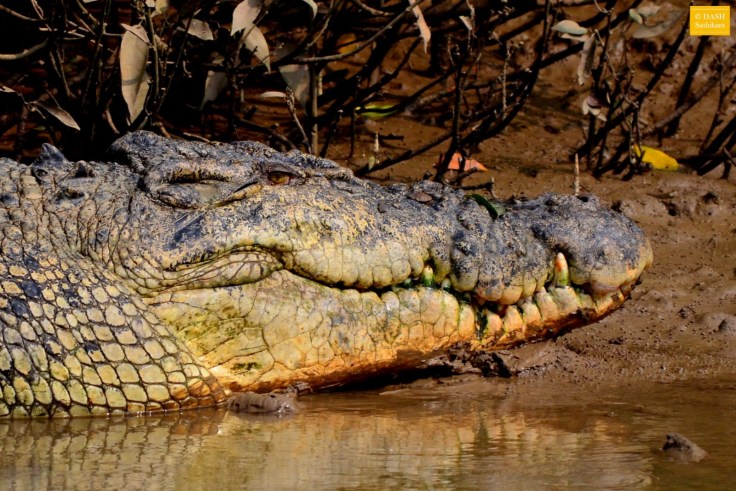
It pains to imagine how many such bottles might be inside the crocodiles stomach. Plastic is one of the worst pollutants on earth and has severe long term damaging effects on any form of life and environment, anywhere in the world. I hope that each one of us reading this plays his/her part in being a responsible traveler while also inspiring others to do the same.
Update: Odisha government has finally started promoting the state to attract more tourists and Bhitarkanika, as expected, does get a mention on the Odisha Tourism website. In fact it’s number one under the nature and wildlife section. If you plan to visit and explore what Odisha has to offer, then do check out their website for more info.


 Sashikant Dash
Leave a comment